
Dublin
This is a city shaped by words.
Quick Facts
Best Time
May – Sept
Duration
3-4 days
Getting There
Dublin Airport (DUB)
Know For
Georgian architecture, music sessions
Dublin makes an impression quickly.
Within hours of arriving, most visitors feel something shift — a sense that the city is easy to be in. The streets are walkable. The people are direct and warm. Music drifts from pub doorways in the middle of the afternoon. And everywhere you look, there’s evidence of a city that takes its literature, its history, and its pints seriously.
This is a city shaped by words.
James Joyce set his masterpiece Ulysses on these streets. Oscar Wilde, W.B. Yeats, Samuel Beckett, and Seamus Heaney all called Dublin home. You can feel that literary DNA in the hallowed shelves of Marsh’s Library, the Long Room at Trinity College, and the kind of conversation that still flows as freely in Dublin’s pubs as it did a century ago.
But Dublin is far from a museum.
The city has undergone a remarkable transformation over the past two decades. World-class restaurants sit alongside traditional pubs. Galleries and studios fill former industrial spaces along the Liffey. The Docklands have become a sleek, modern quarter while the cobblestoned streets of Temple Bar and the leafy squares of Georgian Dublin remain as atmospheric as ever.
What makes Dublin rewarding for the discerning traveler is its layers. Beyond the famous sights — Trinity College, the Guinness Storehouse, St. Patrick’s Cathedral — lies a city of quiet gardens, hidden Victorian pubs, exceptional food markets, and neighborhoods with stories waiting to be found. It’s a city best experienced at an Irish pace: unhurried, sociable, and open to wherever the day leads.
Top Highlights
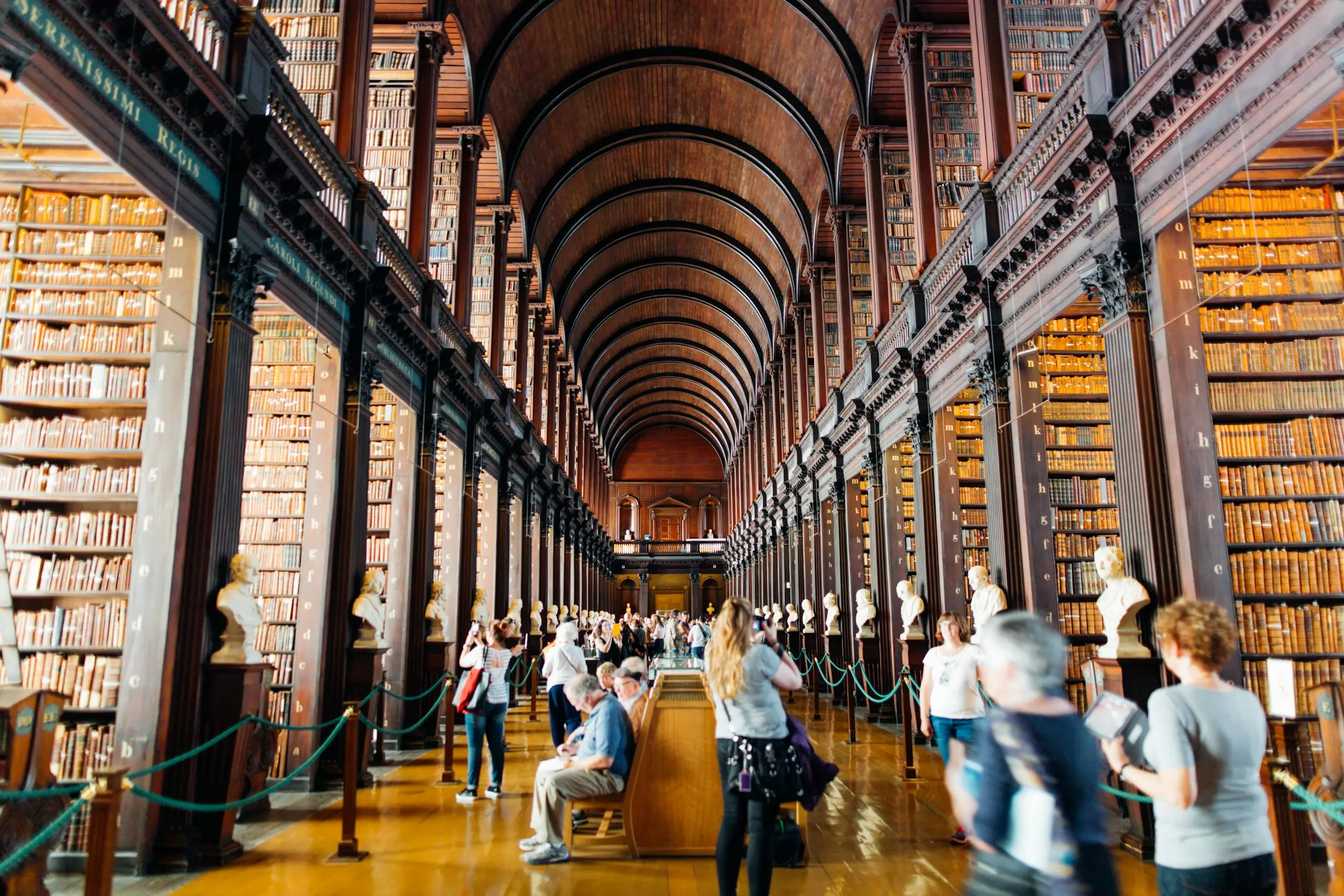
Trinity College & The Book of Kells
Founded in 1592, Trinity College is one of Europe’s most beautiful campuses. The Book of Kells — a lavishly illustrated Gospel manuscript from around 800 AD — is displayed in the Old Library, whose breathtaking Long Room houses 200,000 of the college’s oldest books.
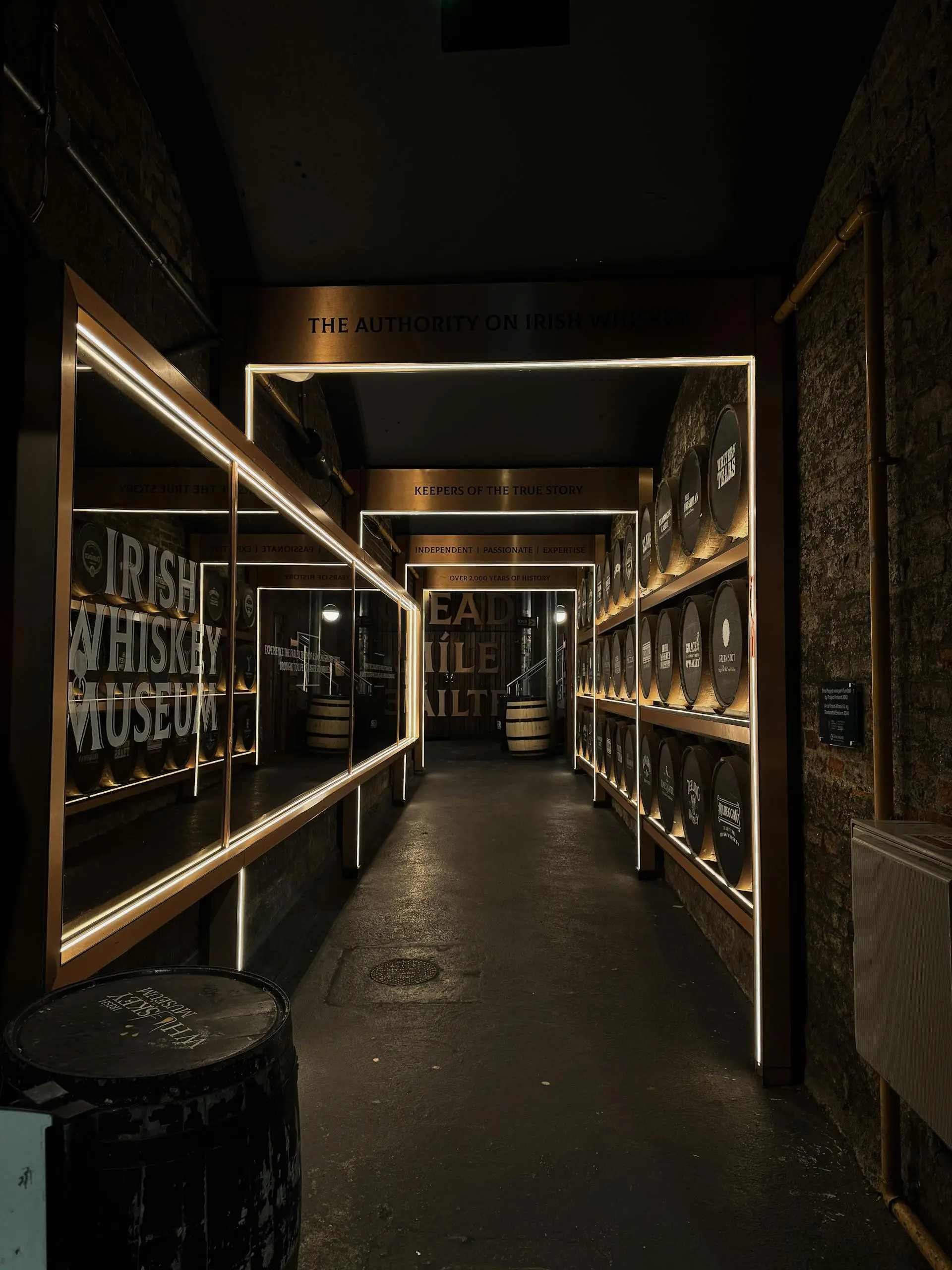
Guinness Storehouse
Housed in the historic brewery at St. James’s Gate, this immersive experience traces the story of Ireland’s most famous export. The Gravity Bar at the top offers panoramic views of Dublin alongside a perfectly poured pint.
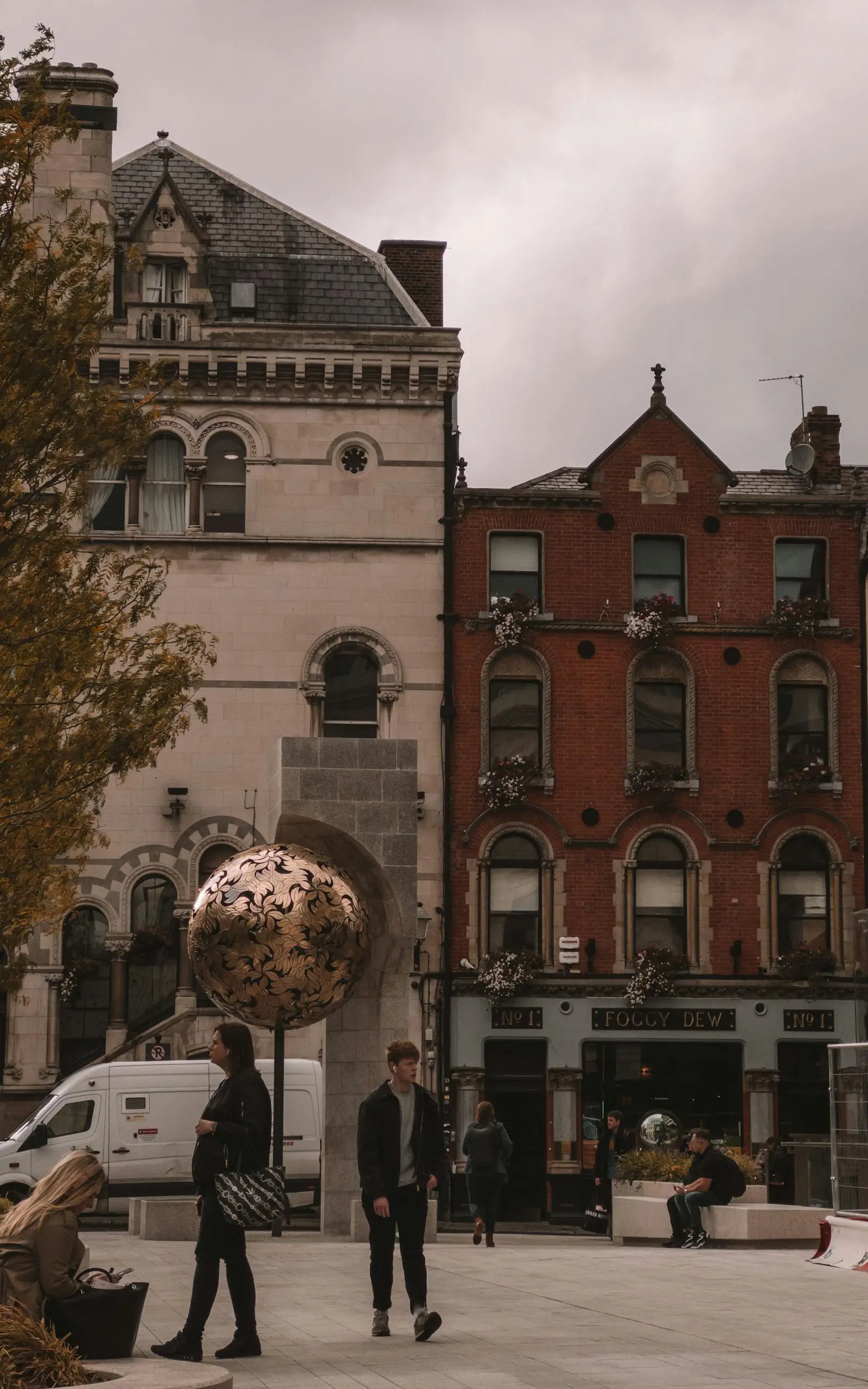
Georgian Dublin
Merrion Square and Fitzwilliam Square showcase 18th-century Dublin at its finest. The colorful painted doorways have become an icon of the city. The surrounding streets hold the National Gallery, the Natural History Museum, and some of Dublin’s best restaurants.
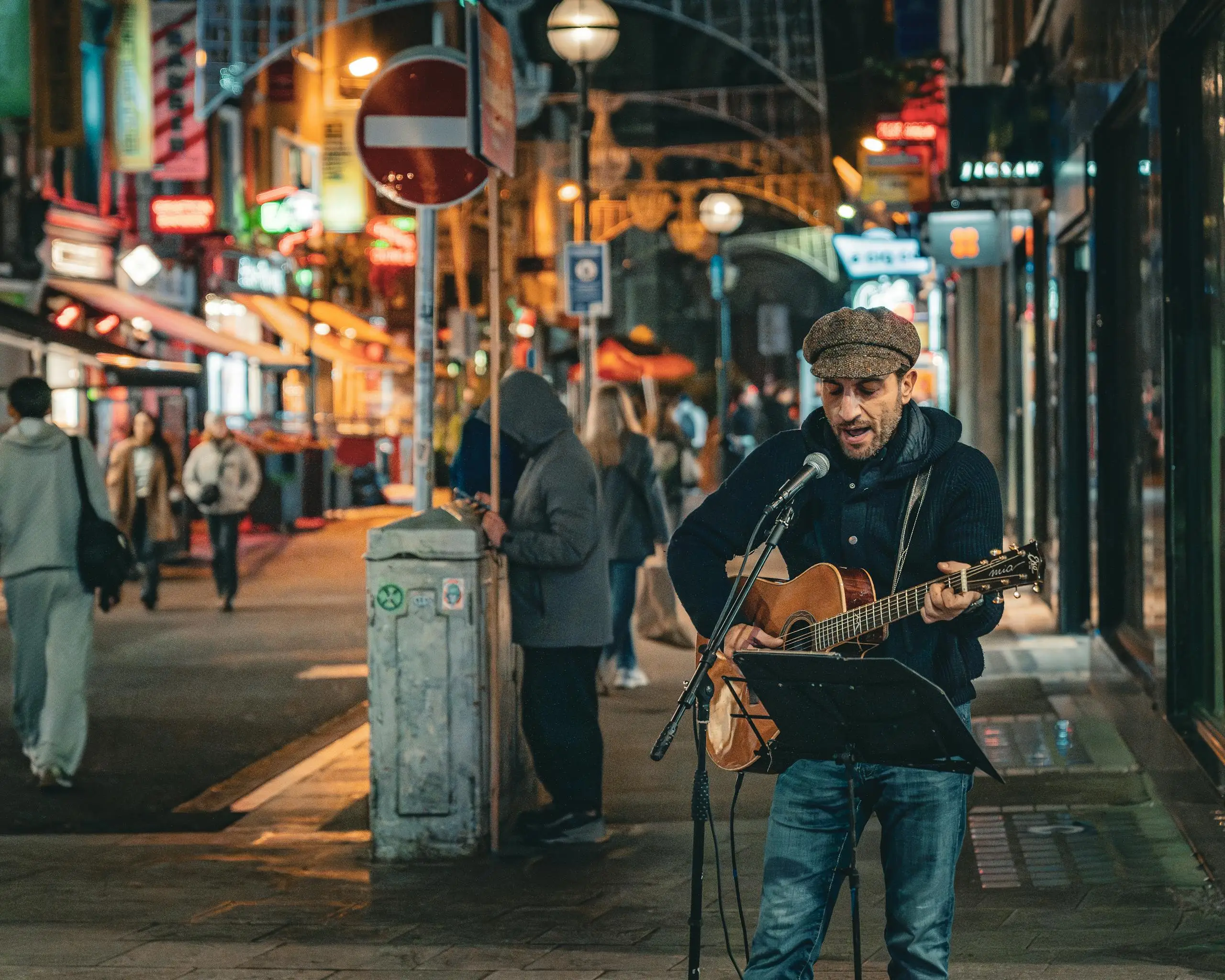
Traditional Music Sessions
Dublin’s pub music scene is alive and authentic. In the right venues — particularly in neighborhoods like Stoneybatter, Smithfield, and around St. Patrick’s Cathedral — you can still find spontaneous traditional sessions that feel like the real heartbeat of Irish culture.
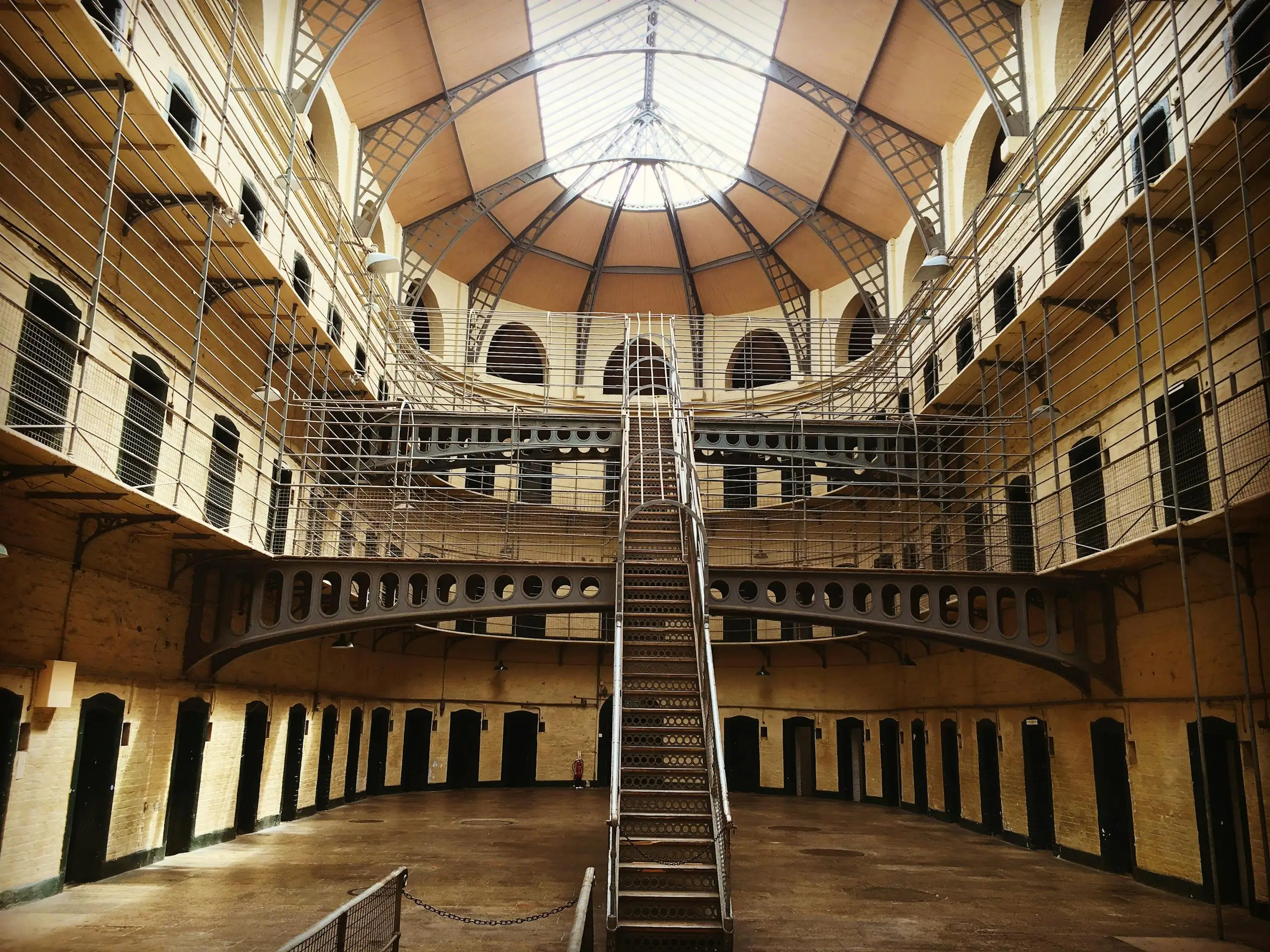
Kilmainham Gaol
This former prison tells the story of Irish independence with extraordinary power. The guided tours bring to life the 1916 Easter Rising and the sacrifices that shaped modern Ireland. Book well in advance — tours sell out.
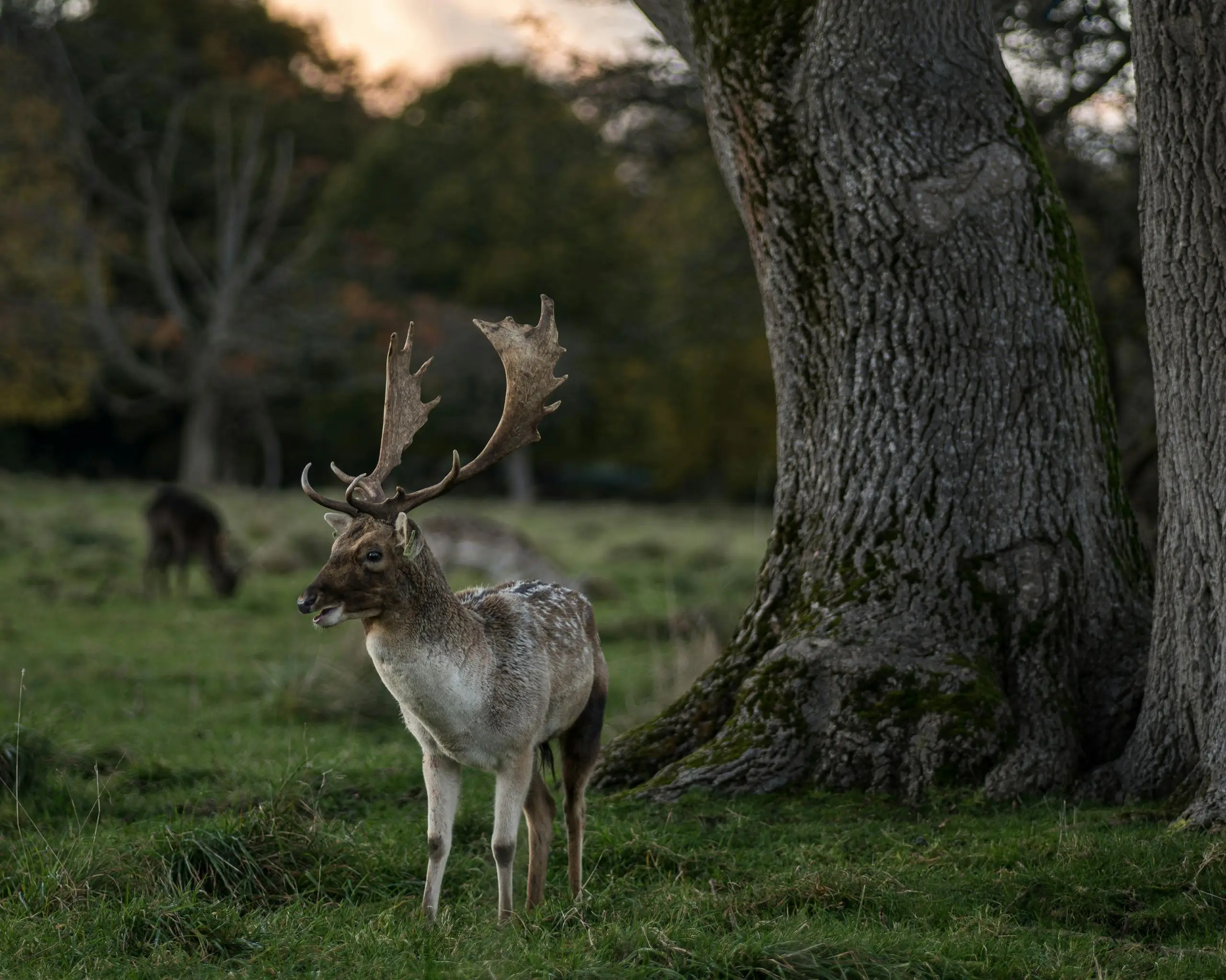
Phoenix Park
One of the largest enclosed urban parks in Europe. Home to a herd of wild fallow deer, the Áras an Uachtaráin, and miles of peaceful walking paths. A genuine escape from the city center.
Sample Itinerary
Literary & Historic Dublin
- Morning at Trinity College and the Book of Kells — book timed entry for early morning.
- Walk through Georgian Dublin along Merrion Square and Fitzwilliam Street.
- Afternoon at the National Gallery or the Little Museum of Dublin.
- Evening traditional music in a genuine local pub, followed by dinner in the city center.
Culture, Craft & Craic
- Morning tour of Kilmainham Gaol — advance booking essential.
- Afternoon at the Guinness Storehouse, finishing with a pint in the Gravity Bar.
- Explore the creative Liberties neighborhood on foot.
- Evening at one of Dublin’s acclaimed modern Irish restaurants.
Markets, Parks & Hidden Dublin
- Morning at one of Dublin’s food markets.
- Walk through Phoenix Park and explore the neighborhoods of Stoneybatter and Smithfield.
- Afternoon at Christ Church Cathedral or the Chester Beatty Library — one of Ireland’s finest museums, with free admission.
- Evening pub crawl through Dublin’s literary pubs or a performance at the Abbey Theatre.
Day Trip or Deeper Exploration
Three options worth considering:
Option A: The ancient passage tombs at Brú na Bóinne (Newgrange) — a UNESCO World Heritage Site older than the pyramids.
Option B: The coastal village of Howth for cliff walks and fresh seafood.
Option C: Malahide and its medieval castle, a short train ride north of the city.
Where to Stay
Luxury
Merrion Square or St. Stephen’s Green
Dublin’s most prestigious hotels occupy grand Georgian buildings near the city’s finest squares. Impeccable service, elegant interiors, and a location within walking distance of Trinity College, the National Gallery, and the best of Georgian Dublin.
Mid-Range
Temple Bar or Ballsbridge
Boutique hotels in Temple Bar keep you at the center of Dublin’s dining and music scene. Ballsbridge, a leafy residential area south of the center, offers quieter, more refined accommodations with easy access to the city.
Charming
Smithfield or Portobello
These neighborhoods offer excellent guesthouses and modern hotels with genuine local character. Smithfield is Dublin’s creative quarter; Portobello — canal-side walks, independent cafes — has a relaxed, village-like feel.
Insider Tips
FAQ
Ready to plan your Dublin trip?
Tell me what interests you most — the literary history, the food scene, the music, the day trips — and I’ll build an itinerary around your pace and travel style.