
Cotswolds
This is England at its most unhurried. And most beautiful.
Quick Facts
Best Time
May- Sept
Duration
3-4 days
Getting There
90 min from London
Known For
limestone villages, rolling hills
You’ve seen the photographs. Nothing quite prepares you for the real thing.
The Cotswolds — an Area of Outstanding Natural Beauty spread across six counties in south-central England — is the living version of an England most people assume only exists in paintings. Stone villages on hillsides. Church spires rising above ancient market towns. Sheep on impossibly green hills. Gardens tended so carefully, for so long, they’ve become works of art.
What makes the Cotswolds special comes down to one material: a warm, honey-colored limestone that gives every village, manor house, and dry-stone wall its distinctive glow. In late afternoon, when these stones turn gold against green hills and a wide sky, the effect is genuinely arresting.
And yet the Cotswolds are not a theme park.
These are living communities, shaped by centuries of working life. Market days bring farmers and artisans to squares that have hosted commerce since medieval times. Country pubs serve locally reared meats and ales from nearby breweries. The region’s gardens — from Blenheim Palace’s grand parkland to intimate village plots — reflect an English relationship with the land that goes back generations.
For the discerning traveler, the Cotswolds offer a particular kind of reward: the luxury of slowing down. Days measured not in sights ticked off, but in pleasures savored — a footpath through wildflower fields, an afternoon browsing antiques in a centuries-old market hall, a cream tea in a garden beside a medieval church, dinner at a village inn where the chef knows the farmer by name.
This is England at its most unhurried. And most beautiful.
Top Highlights

Bourton-on-the-Water
Known as the “Venice of the Cotswolds,” this village straddles the River Windrush with elegant low stone bridges spanning clear water. The village green, flanked by honey-stone buildings, is one of the most photographed scenes in England — and earns it.

Bibury
William Morris called Bibury “the most beautiful village in England.” The evidence is Arlington Row — a terrace of 14th-century weavers’ cottages so perfectly preserved, they appear on the inside cover of British passports.

Blenheim Palace
Winston Churchill’s birthplace and one of England’s finest stately homes. A baroque masterpiece set in 2,000 acres of parkland designed by Capability Brown. The house, gardens, and grounds easily fill a full day.

Stow-on-the-Wold
A hilltop market town at the convergence of ancient roads, known for its antique shops, galleries, and the beautiful old market square. The atmospheric St. Edward’s Church — with its famous tree-framed doorway — is worth the detour.

The Cotswold Way
A 102-mile national trail following the Cotswold escarpment from Chipping Campden to Bath. You don’t need to walk the full route — shorter sections offer glorious walks through wildflower meadows with sweeping views across the Severn Vale.
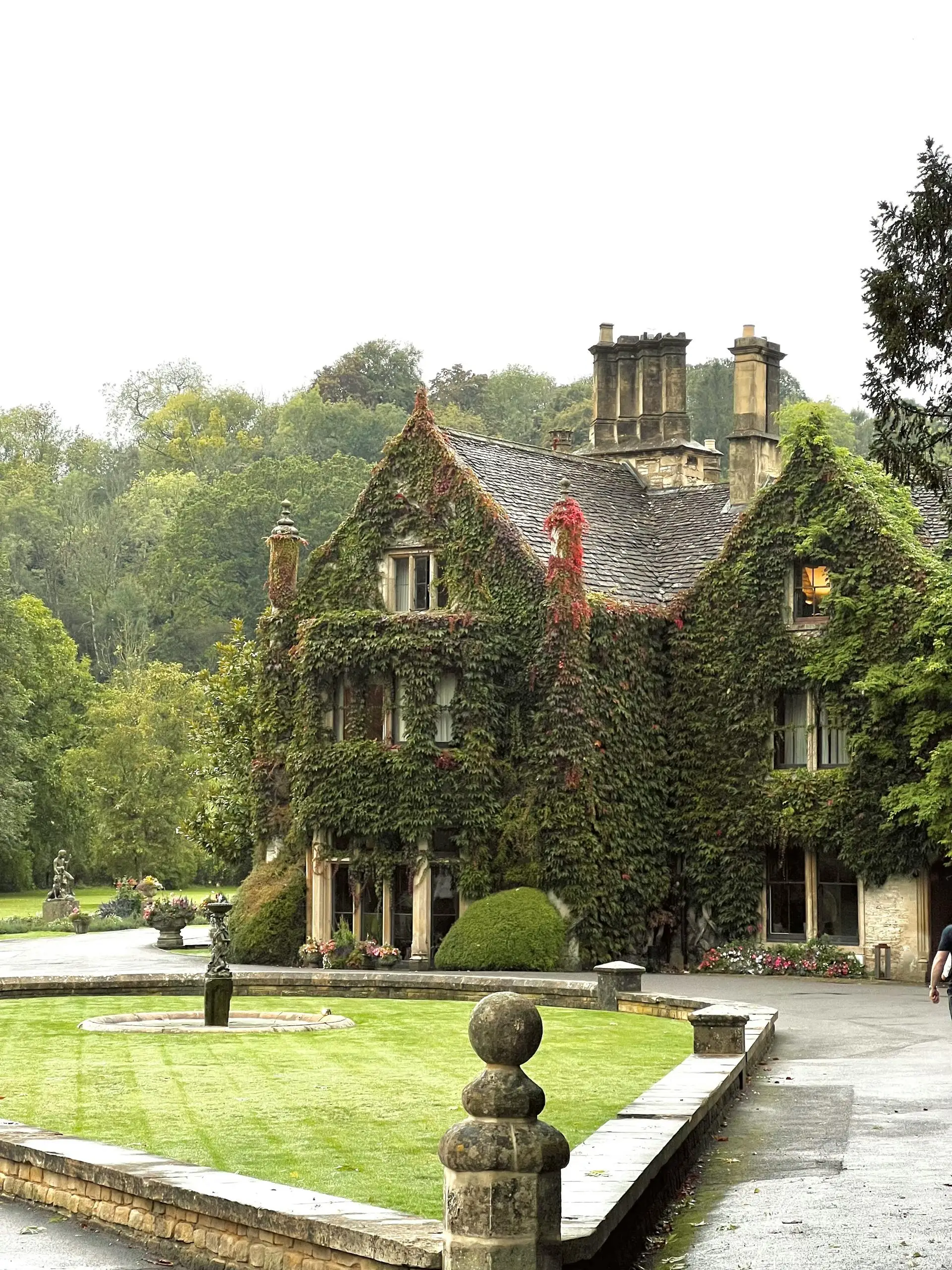
Castle Combe
Frequently voted England’s prettiest village. A sheltered valley, a medieval market cross, a 14th-century church, and a stream crossed by ancient stone bridges. Time moves differently here.
Sample Itinerary
Arrival & Northern Cotswolds
- Arrive early at the Roman Baths before the crowds build.
- Walk from there to the Royal Crescent and visit No. 1 Royal Crescent.
- Stroll through the Circus and down toward the Assembly Rooms.
- Afternoon tea in one of Bath’s elegant tearooms.
- Evening walk along the illuminated Pulteney Bridge, followed by dinner in the city center.
Classic Cotswolds Villages
- Morning in Stow-on-the-Wold, browsing antiques and the market square.
- Drive to the Slaughters — Upper and Lower — two of the most peaceful villages in the region.
- Afternoon in Bourton-on-the-Water along the River Windrush.
- Evening at a traditional village inn with locally sourced cuisine.
Bibury, Gardens & Country Pleasures
- Morning visit to Bibury and Arlington Row.
- A Cotswold garden in the afternoon — Hidcote Manor Garden, Kiftsgate Court, or the Rococo Garden at Painswick.
- Cream tea in a village tearoom.
- Evening at a Michelin-recognized restaurant — the Cotswolds has a surprising number.
Blenheim Palace or Castle Combe
Option A: Full morning at Blenheim Palace and its magnificent grounds, returning through the market towns of Burford or Moreton-in-Marsh.
Option B: Explore Castle Combe and the southern Cotswolds, with an optional section of the Cotswold Way. Onward to Bath.
Where to Stay
Luxury
Country House Hotels & Manor Estates
Some of England’s finest country house hotels are here — beautifully restored manor houses with world-class dining, spa facilities, and manicured grounds. Several occupy buildings dating to the 15th and 16th centuries.
Mid-Range
Village Inns & Boutique Hotels
Historic coaching inns and boutique hotels throughout the region combine genuine character — exposed beams, stone fireplaces, inglenook corners — with modern comfort and excellent food.
Charming
B&Bs & Farmhouse Stays
Family-run B&Bs in converted farmhouses and stone cottages are a quintessentially Cotswold experience. Generous breakfasts, gardens to wander, and hosts who know every footpath and pub in the area.
Insider Tips
FAQ

Ready to plan your Cotswolds trip?
Tell me what appeals most — the villages, the gardens, the country houses, the walking — and I’ll build an itinerary around your pace and interests.